
How Artificial Intelligence is Transforming Indian Agriculture: The Future of Smart Farming
Indian agriculture is entering a new era. Traditional farming methods are being transformed by Artificial Intelligence (AI), robotics, IoT, and data-driven farming. With rising input costs, climate uncertainty, labor shortages, and the need for higher yields, technology is no longer optional—it is essential.
At Arhitha Agrobot, we believe that the future of Indian farming lies in smart, sustainable, and autonomous agricultural systems.
Why Indian Agriculture Needs Technology Now More Than Ever
India supports over 140 crore people, yet agricultural land is shrinking and climate risks are increasing. Farmers face irregular rainfall and drought, rising fertilizer and pesticide costs, shortage of skilled farm labor, crop diseases and soil degradation, and market price fluctuations.
AI-powered agriculture solves these problems by turning farming into a predictive, optimized, and data-driven process.
What is Smart Farming?
Smart farming uses technology such as Artificial Intelligence, robotics, IoT sensors, satellite and drone data, machine learning, and precision agriculture. These tools help farmers make better decisions about when to sow, how much water and fertilizer to use, when to harvest, and how to prevent diseases.
Instead of guesswork, farmers rely on real-time data and AI predictions.
How AI Helps Farmers Grow More with Less
1. AI-Based Crop Monitoring
AI analyzes crop images and sensor data to detect nutrient deficiency, pest attack, fungal infections, and water stress. This allows early treatment, saving crops before damage spreads.
2. Precision Irrigation
AI systems calculate the exact water required for each crop based on soil moisture, weather forecasts, and crop stage. This reduces water wastage by up to 40 percent while improving yields.
3. Automated Weeding and Spraying
AI-enabled robots can identify weeds, spray only targeted areas, and reduce chemical usage. This protects soil, reduces pollution, and cuts costs.
4. Yield Prediction and Market Planning
Machine learning models predict expected crop output, best harvesting time, and optimal selling period. Farmers can plan storage, logistics, and pricing better.
Role of Agri-Robotics in Indian Farming
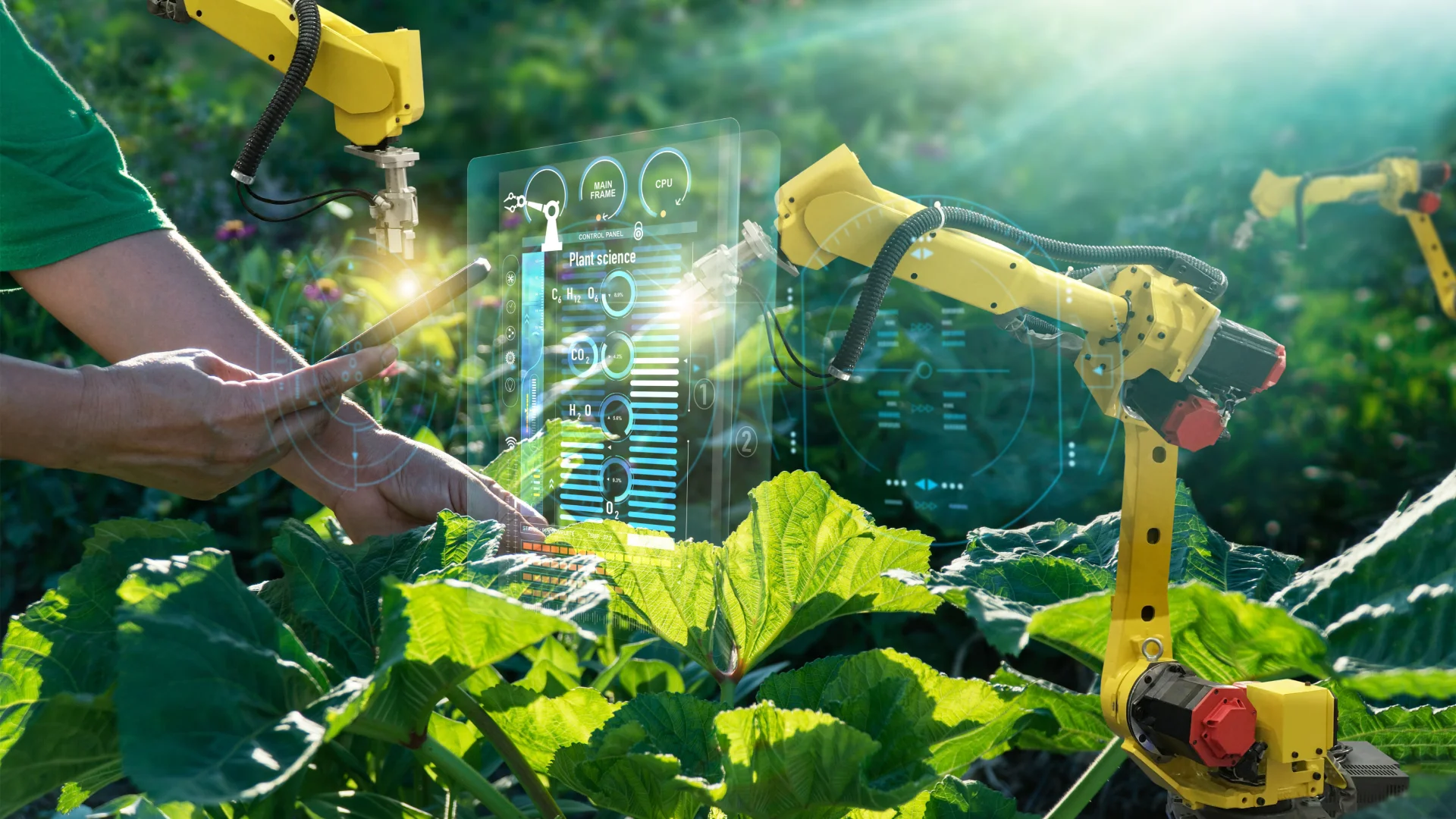
Robotics is the next big leap in agriculture. AI-powered agri-robots can perform sowing, precision spraying, plant health monitoring, and harvesting while operating 24/7. This is crucial as India faces farm labor shortages and rising wages.
Arhitha Agrobot’s Vision
Arhitha Agrobot is building solutions that bring cutting-edge technology to Indian farms. The focus areas include AI-driven crop analysis, autonomous agri-robots, smart farming platforms, IoT-based soil and crop monitoring, and farmer-friendly digital tools.
The mission is to increase farmer income, reduce input costs, and make agriculture sustainable and profitable.
Why AI Agriculture is the Future
The future of farming is data-driven, environment-friendly, highly productive, less dependent on labor, and more profitable for farmers. AI and robotics are not replacing farmers; they are empowering them.
Conclusion
Indian agriculture is on the brink of a technology revolution. AI, robotics, and smart farming will define how food is grown in the next 50 years. Arhitha Agrobot is proud to be part of this transformation—building intelligent solutions that help farmers grow more, better, and sustainably.
Learn more about smart farming and agri-robotics: https://arhithaagrobot.com