

Introduction
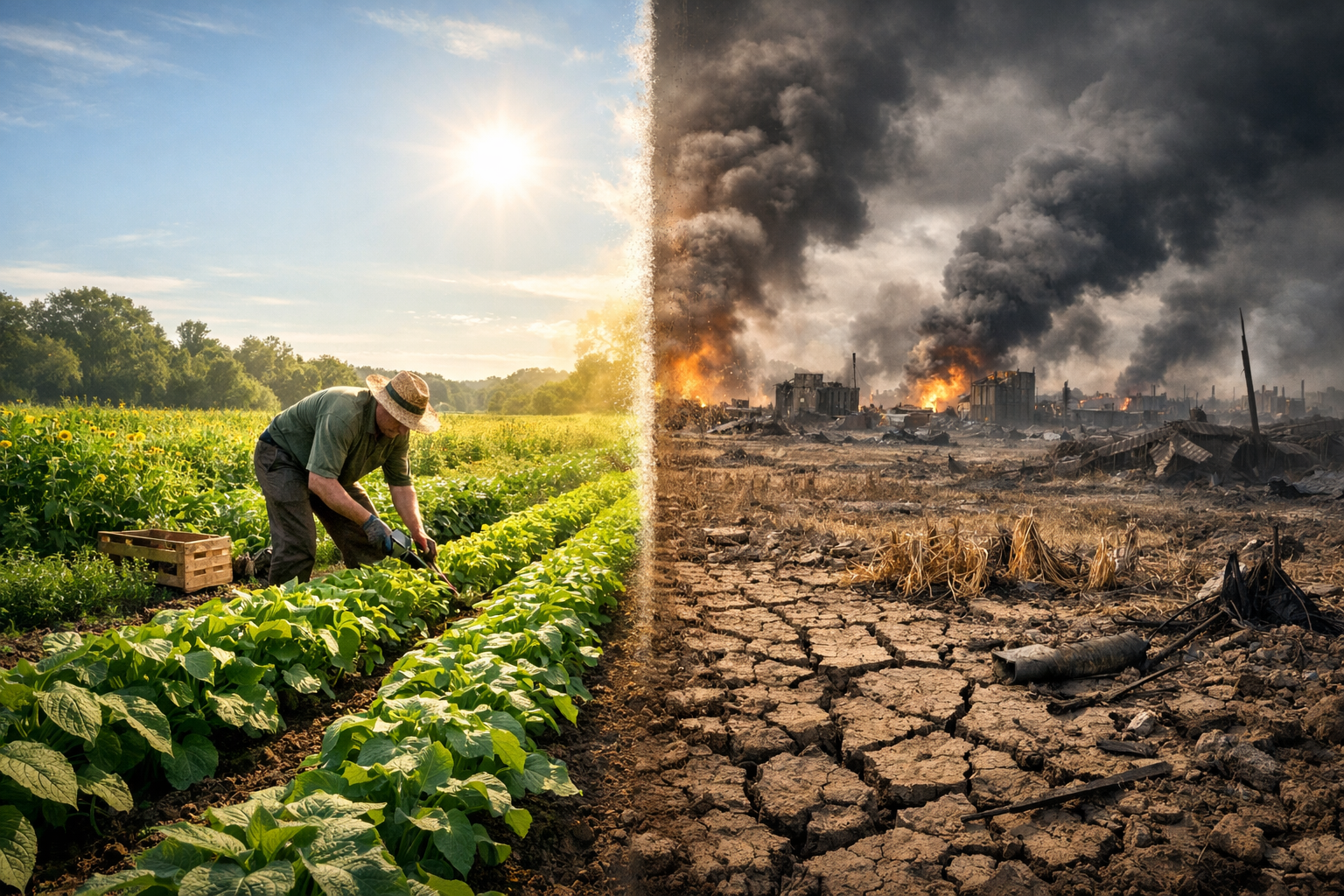
In today’s rapidly changing world, agriculture stands at the intersection of two powerful forces—sustainability and geopolitical instability. While organic farming is emerging as a solution to environmental degradation, global conflicts and wars are increasingly threatening food systems, supply chains, and farmer livelihoods.
This article explores the formation of organic farming, its environmental impact, and how wars reshape agriculture globally, making sustainable practices more critical than ever.
🌾 What is Organic Farming & How Did It Evolve?
Organic farming is not just a modern trend—it is a return to traditional, nature-aligned agriculture. It emphasizes:
- No synthetic fertilizers or pesticides
- Use of compost, bio-fertilizers, and natural pest control
- Crop rotation and biodiversity
- Soil health and ecosystem balance
Organic agriculture focuses on long-term sustainability, improving soil fertility and reducing pollution compared to conventional farming .
Over time, as industrial agriculture increased chemical usage, concerns around soil degradation, water contamination, and health risks led to the revival of organic methods.
🌍 Environmental Impact of Organic Farming
Organic farming plays a significant role in restoring ecological balance.
Key Positive Effects:
1. 🌱 Improved Soil Health
- Enhances soil structure and fertility
- Increases water retention and microbial life
- Reduces erosion
2. 🌿 Biodiversity Conservation
- Supports pollinators, insects, and wildlife
- Promotes diverse crop systems
3. 💧 Reduced Pollution
- Eliminates chemical runoff into water bodies
- Improves groundwater quality
4. 🌎 Climate Change Mitigation
- Stores carbon in soil
- Produces lower greenhouse gas emissions
5. 💡 Sustainable Resource Use
- Encourages recycling of organic matter
- Reduces dependency on external inputs
Organic farms are also more resilient during droughts, as healthier soils retain more moisture .
⚔️ The Impact of War on Agriculture
While organic farming builds resilience, wars disrupt agriculture at multiple levels.
1. 🚜 Destruction of Farmland
Conflicts often destroy:
- Crops and irrigation systems
- Soil quality (due to chemicals, explosives)
- Forest and tree cover
For example, conflicts have led to massive farmland destruction and environmental pollution, including toxic contamination of soil and water .
2. 📉 Disruption of Supply Chains
War affects:
- Fertilizer availability
- Fuel supply
- Export/import routes
Recent conflicts have caused:
- Fertilizer prices to rise by 30–40%
- Global food prices to increase
- Reduced crop yields due to input shortages
3. 🌍 Global Food Crisis
Modern agriculture depends heavily on:
- Chemical fertilizers
- International trade networks
Wars disrupt these systems, leading to:
- Food shortages
- Inflation
- Increased hunger in developing countries
4. 👨🌾 Impact on Farmers
Farmers face:
- Rising input costs
- Reduced profitability
- Shift in crop patterns
Some farmers are forced to:
- Reduce fertilizer use
- Switch crops
- Exit farming altogether
🌿 Why Organic Farming Becomes Critical During War
Here’s where organic farming proves its strength:
✅ Less Dependency on External Inputs
- No reliance on imported fertilizers or chemicals
✅ Localized Production
- Supports local food systems
- Reduces supply chain vulnerability
✅ Resilience to Crisis
- Better soil = stable yields during stress conditions
✅ Sustainable Food Security
- Encourages diversified crops
- Reduces risk of total crop failure
🤖 The Role of Technology & AI (Your Vision – Arhitha Agrobot)
At Arhitha Agrobot, the future lies in combining:
- 🌱 Organic farming principles
- 🤖 AI-driven agriculture
- 📊 Smart soil & crop analytics
- 🚜 Automation & robotics
This integration can:
- Optimize organic inputs
- Predict crop health
- Improve yield without chemicals
- Build war-resilient, climate-resilient farming systems
🌏 Conclusion
In a world increasingly affected by conflict, climate change, and resource scarcity, organic farming is no longer optional—it is essential.
Wars expose the fragility of global agricultural systems, while organic farming offers:
- Stability
- Sustainability
- Independence
The future of agriculture lies in self-reliant, technology-enabled, and eco-friendly systems—a vision that aligns perfectly with the mission of Arhitha Agrobot.
🔑 Final Thought
“The farms that survive the future won’t be the largest—they will be the most resilient.”